MILA ZIMA
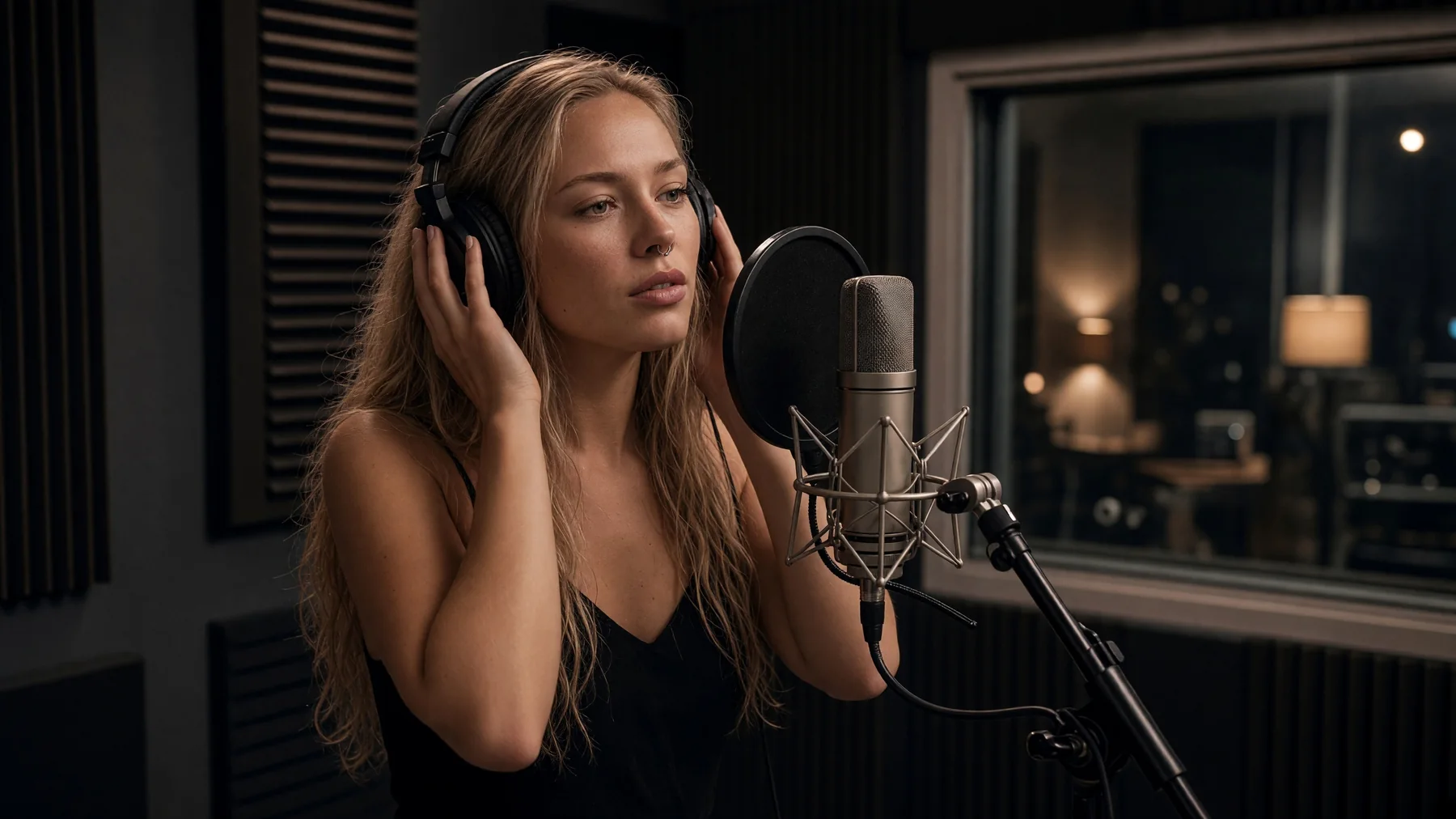
Mila Zima in a vocal booth with headphones on, at the microphone

Song 01 · November 2026

Porcelain

The song · 3:58107.7 BPM · −14.0 LUFS · 48 kHz · stereo13 parts · she sings in 11 of themmeasured from the master · not verified by ear
The whole song, part by part. Height is loudness; rose is her voice.
Click a part to play from there.

01 · The song

Porcelain, as sound.

One recording, 3:58 long. It is the recording the film was cut to.

Three minutes fifty-eight, in thirteen parts. She sings in eleven of them, and in two of those there are no words.

This page is the song as sound: where it is loud, where the voice is alone, where the colour changes, how high the voice goes, and how the master was made. Every number was read from the files. None of it was checked by ear by the agent that measured it; it cannot hear.

The filmHow it was mastered

Length
3:58 · 238.4 s
Tempo
107.7 BPM · one bar 2.23 s
Key
F minor by measurement · not verified by ear
Loudness
−14.0 LUFS · range 4.1 LU
True peak
−1.0 dBTP
Master
48 kHz · stereo · 24 and 16 bit
The tune
mostly between C4 and E♭5
Her voice
heard for 198 s · absent for 40 s
Voice
Mila's own, generated · Suno
Style
soul-pop with a rock edge

02 · The parts

Thirteen parts.

Click a part to play from there. There are no lyrics on this page; each part is described by what was measured in it.

03 · Sound colour

Where the sound sits.

Five readings on one time line, from the first second to the last. Click anywhere in a chart to play from there. Measured from the files; not verified by ear.

The whole song40 Hz to 16 kHz, logarithmic · brighter is louder
Spectrogram of the whole song Porcelain, from 40 Hz to 16 kHz100 Hz1 kHz10 kHz

Spectrogram of the master. The display is tilted 3 dB per octave so that the top is visible; the range from dark to bright is 62 dB.

Loudnessshort-term, 3 smomentary, 0.4 s
−14 LUFS−20 LUFS−26 LUFS

EBU R 128. The whole song reads −14.0 LUFS with a loudness range of 4.1 LU. The loudest three seconds are at 3:25 (−12.2 LUFS).

Voice and bandlead vocaleverything else
−20 dB−30 dB−40 dB

Level of the take's lead-vocal channel and of the rest, half a second at a time, before mastering. The rest includes the backing voices. Where the upper line falls away she is alone.

ColourLowLow midMidPresenceAir
50 %

From the bottom up: low (20 Hz to 120 Hz), low mid (120 Hz to 500 Hz), mid (500 Hz to 2 kHz), presence (2 kHz to 6 kHz), air (6 kHz to 20 kHz). Over the whole song: low 25 %, low mid 21 %, mid 39 %, presence 11 %, air 5 %. The energy-weighted centre is 1310 Hz.

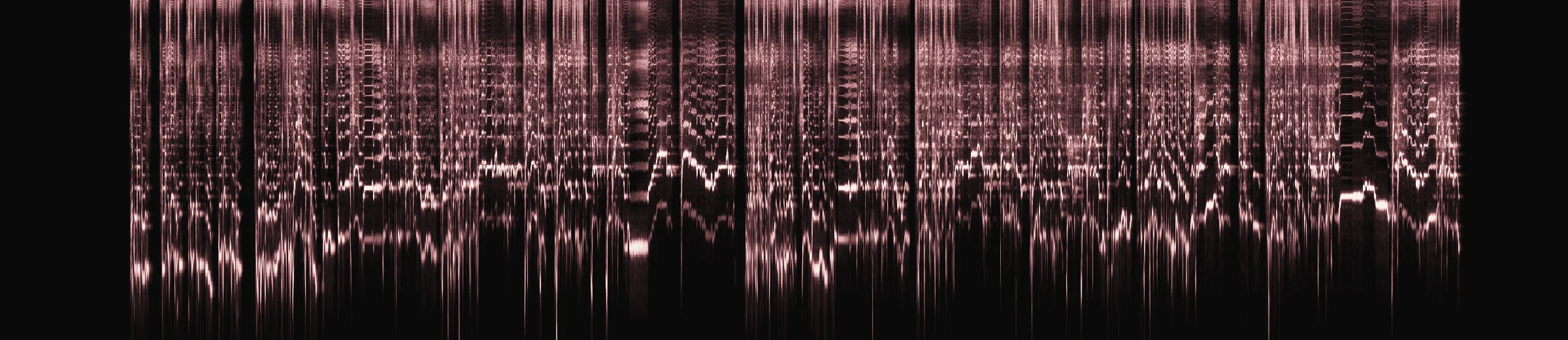
The voice alone100 Hz to 10 kHz, logarithmic
Spectrogram of the lead vocal of Porcelain, from 100 Hz to 10 kHz1 kHz

Spectrogram of the lead-vocal channel. The lowest bright line is the note she sings; the lines above it are its overtones, and their weight is the colour of the voice.

Average spectrumverseschorusesbridge
0 dB−10 dB−20 dB

Third-octave bands from 50 Hz to 16 kHz, relative to the loudest band of the whole song.

Where the voice sitsseconds on each note
5 s10 s15 s

pYIN on the lead-vocal channel, 158 s of pitched voice. Most of the singing lies between C4 and E♭5; the note held longest in total is A♭4. The channel also carries 22 s at G5 and above, up to C6, in the choruses and in the rise (the rose bars). In 11 of those seconds there is a second, much weaker line an octave lower, about 29 dB down. One voice with a very strong overtone, or two voices an octave apart: the measurement cannot tell.

Part by part

PartStartsLengthWordsVoiceBandLoudnessCentreNotes: low · most · high
Intro0:0019 s··−23.5 dB−13.4 LUFS1178 Hz·
Verse 10:1936 s61−23.5 dB−25.6 dB−14.4 LUFS1241 HzA♭3 · C4 · B♭4
Pre-chorus 10:5716 s28−22.8 dB−24.0 dB−13.6 LUFS1435 HzE♭4 · A♭4 · B♭4
Chorus 11:1620 s23−22.5 dB−22.9 dB−13.6 LUFS1575 HzB3 · C5 · C6
The rise1:3616 snone−21.1 dB−22.9 dB−13.9 LUFS1211 HzF4 · C6 · D♭6
Verse 21:5314 s34−22.6 dB−24.9 dB−15.0 LUFS1488 HzB♭3 · E♭4 · A♭4
Pre-chorus 22:1016 s29−22.8 dB−26.3 dB−14.5 LUFS1510 HzE♭4 · A♭4 · A♭5
Chorus 22:2820 s26−22.3 dB−23.9 dB−13.4 LUFS1419 HzB♭3 · C5 · C6
Bridge2:4815 s33−22.1 dB−25.4 dB−14.4 LUFS1417 HzF4 · A♭4 · D♭5
Last chorus3:0420 s27−21.2 dB−24.4 dB−13.6 LUFS1477 HzG4 · C5 · C6
The peak3:247 snone−16.8 dB−22.7 dB−12.4 LUFS863 HzE♭5 · F5 · A♭5
Closing3:3111 s12−19.3 dB−22.4 dB−12.4 LUFS1287 HzA♭4 · B♭4 · E♭5
Outro3:4216 s··−33.0 dB−21.9 LUFS475 Hz·

Voice and band: level of each channel before mastering, dB below full scale. Loudness: median short-term LUFS of the master. Centre: energy-weighted centre of the spectrum. Notes: 5th percentile, the note held longest, 95th percentile.

04 · How the sound was made

One take, mastered twice.

Her voice is generated. The choices were made by a person, by ear; the measuring was done afterwards.

  1. 01

    The voice

    One generated voice, made once in Suno and kept. She sings every song with it.

  2. 02

    The take

    The song was generated more than once. The director listened to the takes and chose this one by ear.

  3. 03

    The check

    The voice of that take was separated from the band and every word was timed. The words she sings were compared with the words as written. One word is not clear in her diction.

  4. 04

    The master

    Made from the full mix of the take at 48 kHz, not from summed stems. The voice is separated, raised 2.5 dB and put back. Then a high shelf of +1.2 dB at 10 kHz and a bell of +0.8 dB at 3.5 kHz, Q 1.2. Then loudness normalisation in two passes, to −14.0 LUFS with the true peak at −1.0 dBTP.

  5. 05

    Twice

    The first master, on 13 November, started from a 44.1 kHz file. The second, a day later, started from the take's own 48 kHz mix, with the same chain and the same targets. The second one plays on this page.

  6. 06

    The files

    A 24-bit WAV and a FLAC at 48 kHz, a 16-bit WAV, and an MP3 at 320 kbit/s. This page plays the MP3.

  7. 07

    The voice alone

    Two separations of the voice exist. One is made locally with Demucs and is part of the master chain. The voice charts on this page are read from the other: the take's own lead-vocal channel, as the generator gives it.

What was measured with what.

Loudness: ffmpeg ebur128. Spectrum, tempo, key estimate and pitch: librosa (STFT, beat tracker, chroma, pYIN). Separation: Demucs. Word times: faster-whisper. The charts are drawn by the page generator from those numbers.

Loudness
−14.0 LUFS integrated · range 4.1 LU
True peak
−1.0 dBTP · sample peak −1.0 dBFS
Peak to RMS
16.3 dB
Stereo
left–right correlation 0.83 · side 10.3 dB below mid
Format
48 kHz · stereo · 24 and 16 bit

05 · What is not known

Nine open points.

The song is finished. These are the things on this page that nobody has confirmed.

  1. 01The key. Three estimates do not agree. From the master: F minor (0.79), F major (0.68), C minor (0.64). From the band alone: F minor (0.77), F major (0.71), C major (0.56). From the notes the voice spends its time on: C minor (0.82), A♭ major (0.69), F minor (0.63). The style brief asked for F sharp minor. Nobody has checked it at an instrument.
  2. 02The pitch readings come from an algorithm, not from a musician's transcription. Of the 22 seconds it places at G5 and above, 11 also show a weaker line an octave lower. In those seconds the sung note may be the lower one.
  3. 03One word at the end of the first verse, around 0:51 to 0:55, is not clear in her diction. A transcription model hears two other words there.
  4. 04Voice and band levels are read from the take's channels before mastering. The master raises the voice by 2.5 dB, so in what you hear the voice sits a little higher against the band than these two lines show.
  5. 05The word counts come from a transcription of the first master. In the parts without words it sometimes writes words that are not there; those parts are counted by hand as wordless.
  6. 06The tempo is one number from a beat tracker for the whole song. It was not checked against a click.
  7. 07The film was cut to the first master, at 44.1 kHz. This page measures the second. Same take, same chain; the two files are not identical.
  8. 08This page has no lyrics, no score and no chords.
  9. 09The agent that measured all of this cannot hear. It reads levels, spectra and pitch curves. Whether the song is good was decided by a person.

The same song in 56 shots

The film
Intro0:00 / 3:58