MILA ZIMA
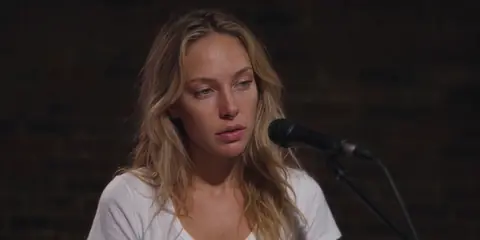
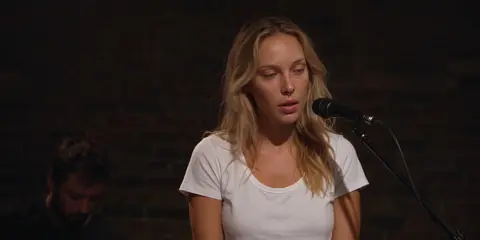
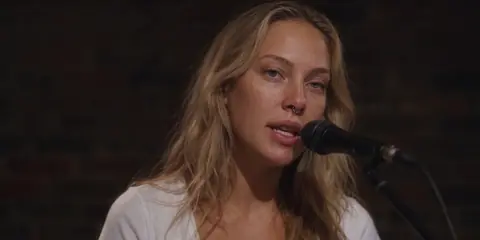
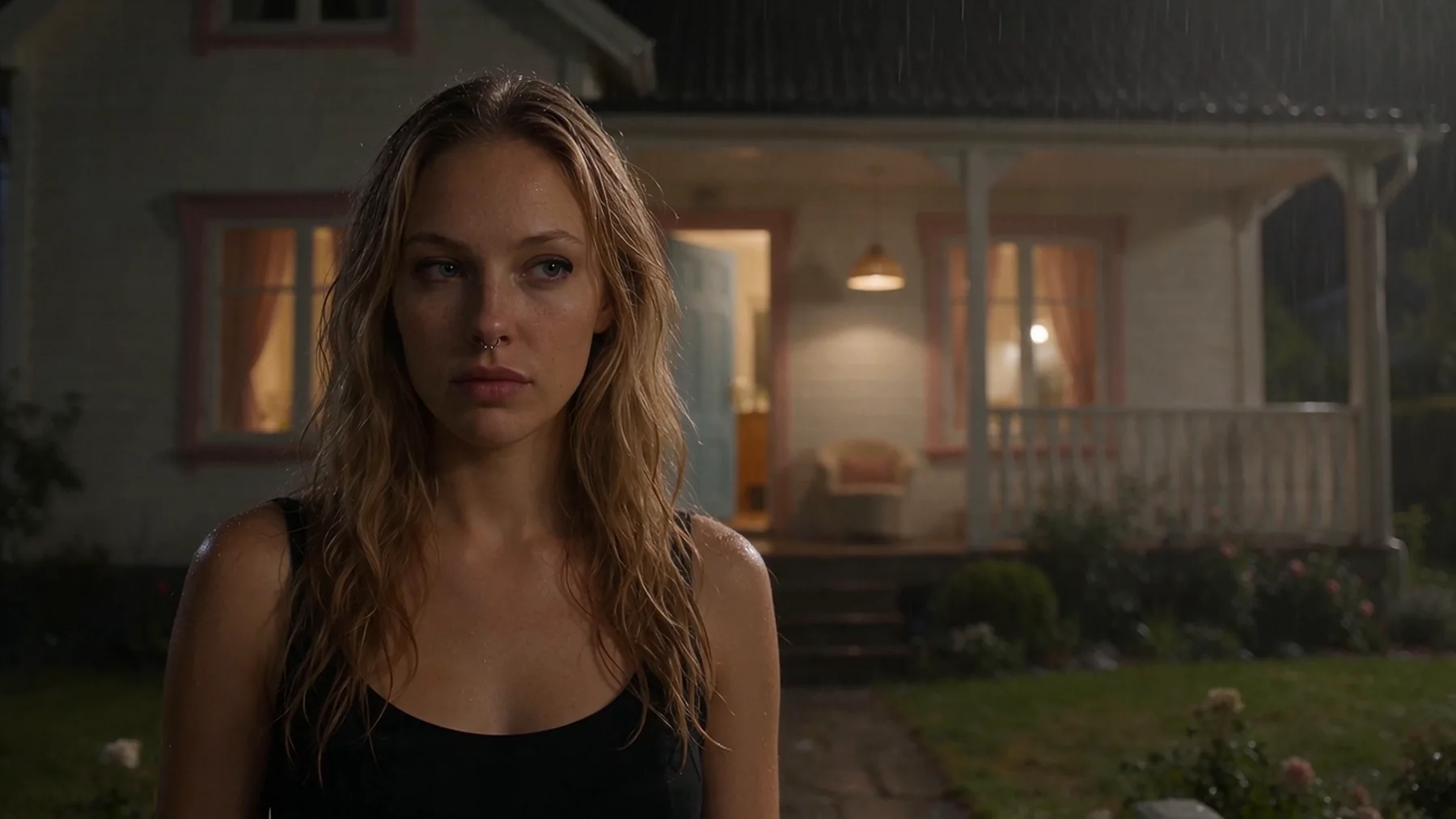
Mila Zima at night in the rain, her hair wet, the lit porch of a small house behind her

The new film · November 2026

Have You
Forgotten Me

The film · cut 273:59 · 1920×1080 · 30 fps73 shots · 22 of them memories471 takes · 73 shots · 1 song
One day, shot by shot.
Point at a shot; click to play from there.

01 · The song

3:42, and nobody sings to the camera.

A heartbreak ballad. This is the page of its film: the film, every shot, how it was made and what is still wrong with it.

A morning run through a small harbour town, a birthday cake she picks up on her own, and one summer she keeps going back to. By night she is alone at a table set for two, and then barefoot in the garden while it pours.

It is her first film with a story, and the first in which she never sings to the camera. The song runs over one day of her life. 22 of the 73 shots are memories of the year before, and they share one warm, faded tone so that they read as the past.

Watch on YouTubeWho sings it

Film
3:59 · 239.0 s
Recording
3:42 · 222.8 s · starts 6.0 s into the film
Tempo
107.7 BPM · one bar 2.23 s
Voice
Mila's own, generated · Suno
Style
soul-pop with a rock edge
Rain
a field recording of rain under the last minute · kvgarlic, Wikimedia Commons, CC0
Loudness
−14.7 LUFS · peak −2.2 dBFS, as in the film file

02 · The film

Nine parts.

The film follows the song part by part. Click a part to play from there.

03 · Shot by shot

73 shots.

Every shot in the film with its take, what it was given, what was measured and the prompt as it was sent.

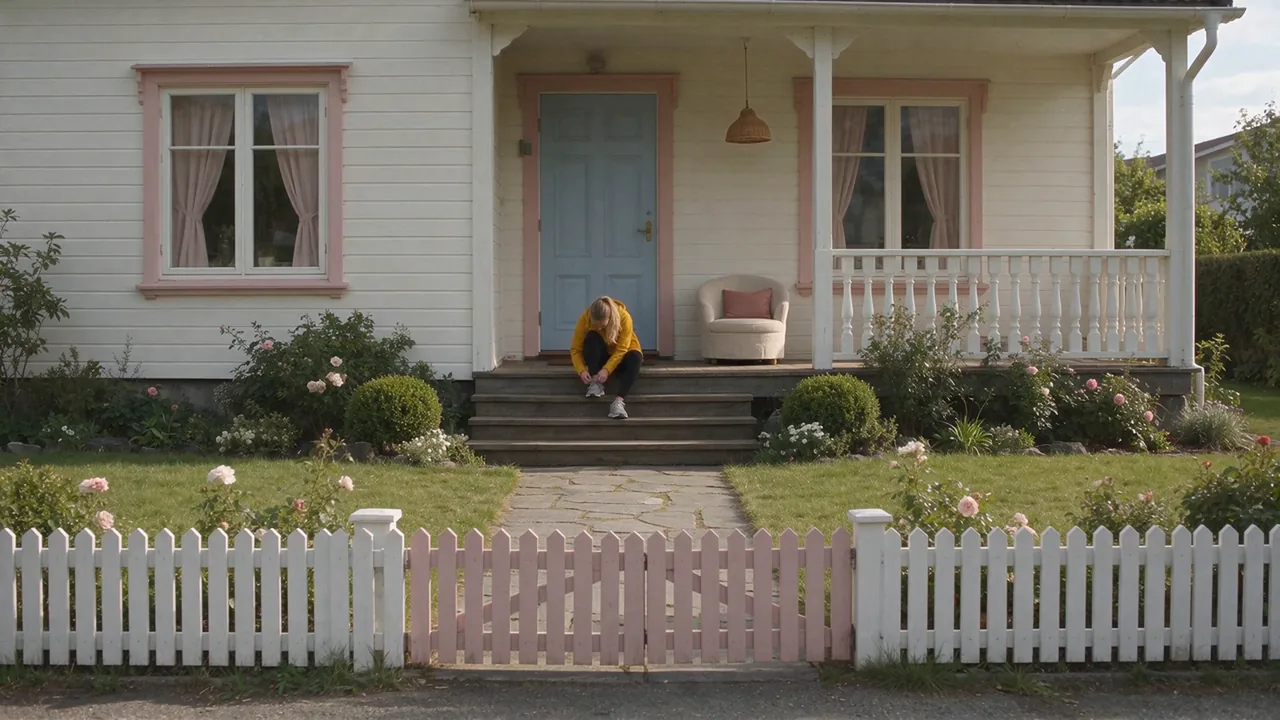
Shot 1 of the film: The house, morning
Wan 3.0 · today1920×1080 · 30 fps

Prompt, as sent

She finishes tying the lace of her right shoe: her hands pull the bow tight. She stays seated on the top step, bent forward, her head lowered over her shoe; her face is never seen. A light wind moves the roses and the leaves a little, and the rattan lamp that hangs under the veranda roof sways very slightly on its cord. The lamp is not lit. The camera is still. The house, the pale blue door, the pink window frames and curtains, the pouf armchair, the white fence and the pink gate stay exactly as they are; the gate stays closed. Natural real-time speed, no slow motion. Dry, the same soft sunlight. No text, no logos.

Shot 01 / 730:00 · 1.6 s

The house, morning

Time
0:00 · 1.6 s on screen
Kind
today
Take
Wan 3.0 · 720p · 5 s take
Given
one still, as its first frame
Face
no reading: she is seen from behind, turned away, from far away or not at all
Cost
$0.30 · generated in 99 s
Made
20 Nov 2026, 22:38
Note
Shot at 720p and scaled to the size of the film.

a memory · 22 of 73 shots

04 · How it was made

471 takes for 73 shots.

From the first take to the last one, five days. The numbers below include every still and every take that was thrown away.

  1. 471

    takes generated11 more requests never went through

  2. 73

    shots in the filmcut from 70 different takes

  3. 723

    stills generatedevery take starts from one

  4. $254

    spent on takes and stills$30.10 of the takes is in the film

  1. 01

    The song, mapped

    The recording was measured before anything was drawn: tempo, every beat, where the band comes in and drops out, where each line starts. The cuts were placed against that map.

  2. 02

    A day, written as shots

    The story is a list of shots: what she does today, and what she remembers. Today is one day, from the porch step in the morning to the garden at night. The memories are a year of the two of them.

  3. 03

    Places, locked as pictures

    The front of the house, the kitchen, the birthday table and the bakery each exist as one reference still with a written description: the colour of the door, which side the veranda is on, what stands on the table. Every later still of that place starts from it.

  4. 04

    A still first, then a take

    No shot was generated from words alone. Each one starts from a still that was made, looked at and, where her face is in it, measured. The take is that still set in motion for a few seconds. 87 of the 471 takes were also given the frame they had to end on.

  5. 05

    Never robotic

    The director's rule since cut 12, written into every prompt: real people caught in an ordinary moment, skin with pores, nothing symmetrical, nothing polished; and movement at human speed, with nothing held like a pose.

  6. 06

    Her face, measured

    Every frame in which her face is the subject is compared with her face sheet. Where several faces are in the frame, everything but hers is greyed out first, so that the ruler does not measure somebody else. A frame that fails is not used and not shown.

  7. 07

    The rain dance

    The last 50 seconds were made more than once. Dancing asked for in words kept failing: random moves, stopping and starting. What held was eight long takes with a camera that circles her while she moves slowly and heavily, joined by short dissolves instead of cuts.

  8. 08

    The cut and the grade

    The film is one file of shots with their seconds. Shots of the same scene are matched to each other by measurement, the memories share one tone, and a fine grain goes over everything. The master is 2560×1440, scaled from 720p and 1080p takes without AI upscaling: a test on three shots wiped her freckles.

Three video models were used. Two carried the film; the third was one trial for the dance.

Film: Wan 3.0 and Wan 2.7. Stills: Seedream 5.5. Measuring: InsightFace (as an internal ruler only), OpenCV, the loudness meter of ffmpeg. Cut, grade and sound: ffmpeg.

Wan 3.0
338 takes · $150.84
Wan 2.7
132 takes · $69.90
Seedance 2.5
1 take · $1.66
720p
208 takes
1080p
263 takes
All takes
471 takes · $222.40
Seedream 5.5
723 stills · $31.98

05 · The cuts

Twenty-seven cuts.

Each cut was watched by the director and answered with notes. These are the ones that changed the film most. The agent that builds it cannot watch it or hear it; it works from frames and measurements.

  1. Cut · November 2026

    The director’s note

    What changed

  2. Cut 1220 Nov · 22:16

    Fix all of it now. One rule from here on: her face, her expressions, her body and the way she moves are never robotic, never smooth, never the kind of perfect that gives a machine away. And whatever I say about the house stays fixed for every later scene.

    The front of the house became one locked picture with a written description: the door behind her, the veranda on one side only, pink window frames, a kept garden, a white fence, a pink gate. Two lines about real people and human speed went into every prompt. The bakery was shot again.

  3. Cut 1320 Nov · 23:25

    The birthday is far too bright. Make it just after sunset: lights in the tree, coloured lamps on the table, a plain cake with few candles. The kitchen is out of proportion. The fence was white, I said so before. No candles on the evening table.

    The kitchen and the birthday table were locked the same way as the house. The title is now written on letter by letter and crumbles away. First version of the dance in the rain.

  4. Cut 1621 Nov · 12:00

    At 0:39 she slows, looks toward the harbour and takes her hood down. About a second, no more. And the song jumps at 0:59.

    The hood comes down at 0:39 and stays down for the rest of the day. The jump came from cutting a scene out of a finished file. Since then a scene is removed in the edit and the gap is filled with a shot, so the song is never touched.

  5. Cut 1721 Nov · 12:26

    The dance in the bar still looks artificial. Their own faces, really happy, their friends next to them, everyone consistent from shot to shot.

    The bar was rebuilt from one wide still, with the same three friends in every frame, and every frame with her face was measured.

  6. Cut 2221 Nov · 15:21

    Take the bar dance out, now. We shoot it on a beach instead: sunset, she is on a sunbed, he pulls her up, they dance, the people around them clap.

    The bar is gone from the film. The beach dance took its place in five shots. By the evening the cut ran four minutes.

  7. Cut 2523 Nov · 20:32

    These fifty-six seconds of dancing are all rubbish. She should move slowly and heavily, wandering the garden a little drunk, drinking from the bottle. The camera circles her, starting at her feet and rising. The end, where she seems to cry seen from behind, is good: keep it.

    The dance was shot again as long takes with a circling camera. Two more notes the same evening: one awkward figure replaced by a slower one, and no more movement once she has turned toward the house.

  8. Cut 2623 Nov · 22:07

    The rain at the end is loud and not natural. The closing words come after the rain. Wrong shoes on the steps. Every memory in its own tone, so that it reads as the past. At 1:00, seen from behind, she looks heavier than she is. She waits too long at the door: one second of thought, and the argument comes to her there. The people watching the lantern stand frozen. And she does not lie on the couch: she blows out one candle on the cake she bought, alone.

    Nine changes in one pass: the steps shot again, one tone for all 22 memories, the corner shot corrected in the cut, the door joined to the argument, a new lantern shot, the cake with one candle, a real recording of rain, the closing card after it, its words in English.

  9. Cut 2724 Nov · 00:03

    This is the clip. Now make it look like a finished film, in the best quality we can upload.

    The master: 2560×1440, shots of one scene matched to each other, a soft curve, fine grain, the song from the lossless file. AI upscaling was tried on three shots and rejected.

  10. Locked24 Nov · 00:46

    One thing: in the lantern shot at 2:41 that is not her. Leave it for now.

    Left as it is and listed below. The film went out the same day.
06 · What is still wrong

Thirteen known flaws.

The film went out with these in it. They are listed so that the next one starts from them.

  1. 01She never sings in this film. Lip sync, the hardest problem of the first two films, was avoided here, not solved.
  2. 02The lantern shot (2:40 to 2:48). The two of them are seen from behind, and her hair is darker and more curled than in the rest of the film. The director flagged it after the film was locked.
  3. 03The corner (0:57 to 1:03). Seen from behind she looked heavier than she is. The shot was not made again: it is stretched in height in the cut, and the houses stretch with her.
  4. 04The candle (2:48 to 2:56). Her face sits on the edge of the threshold in both cake shots, and drops to 0.48 while she blows. 10 of the 12 frames tried for these two shots were rejected before one passed.
  5. 05Face match. In the 23 shots where her face is the subject, 140 readings were taken in the finished cut; 13 of them are under 0.47. The lowest, 0.34, is in the rain, where the circling camera passes her profile. In the other shots her face is turned away, small, covered or not in the frame; those have no usable reading and were checked by eye.
  6. 06His face has no reference sheet and no ruler. It was checked by eye only.
  7. 07156 of the film's 239 seconds were shot at 720p and scaled up; 61 at 1080p. The opening title was drawn at 720p.
  8. 08Shots of one scene were matched to each other by numbers, not by a colourist's eye.
  9. 09The first ten seconds of sound come from the mix of an earlier cut. The rest was rebuilt from the lossless song.
  10. 10Three shots are not in the ledger: two office shots from a parallel session and the closing card. Their prompts and cost are missing from this page.
  11. 11On YouTube the end-screen tile covers the first word of the last line of the closing card.
  12. 12The agent that builds the film cannot watch it at speed or hear it. It works from frames and measurements. The wrong shoes on the steps, the frozen onlookers and the loud rain were all found by the director, not by a measurement.
  13. 13Of $222.40 spent on takes, $30.10 is in the film. The rest went to takes that were looked at and thrown away, and to scenes that were later cut from the film: a bar, a car, a couch.

The film before this one

Porcelain, acoustic